
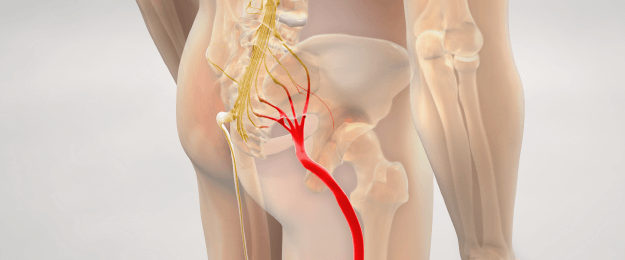
The sciatic nerve is the largest nerve in the human body, running from the lower back through the hips and down each leg. It plays a vital role in movement and sensation. However, the sciatic nerve does not always follow the same path in every individual. Understanding these variations is important for surgeons, anesthetists, and healthcare professionals who work around the pelvic region.
What Was the Purpose of the Study?
This study aimed to examine the size, shape, and anatomical position of the sciatic nerve in Nigerian adults. Researchers were particularly interested in determining whether differences exist between males and females and how the nerve relates to important pelvic landmarks.
How Was the Study Conducted?
The study examined 98 lower limbs obtained from adult Nigerian cadavers, including 66 males and 32 females. Through careful dissection, researchers exposed the sciatic nerves and recorded their anatomical patterns and variations.
Measurements were taken between the sciatic nerve and key pelvic landmarks, including:
- The Posterior Superior Iliac Spine (PSIS)
- The Greater Trochanter (GT) of the femur
- The Piriformis muscle, a small muscle located deep in the buttock region
The data collected were analyzed statistically to identify relationships between these structures.
What Did the Researchers Find?
Different Sciatic Nerve Pathways
The relationship between the sciatic nerve and the piriformis muscle showed five different anatomical patterns. The most common pattern, often referred to as the “typical” arrangement, was found in 83% of cases.
Differences in Nerve Thickness
The sciatic nerve varied in thickness among individuals:
- In males, the nerve ranged from 8.6 mm to 18.5 mm.
- In females, it ranged from 11.9 mm to 17.3 mm.
These findings demonstrate that considerable natural variation exists in the size of the sciatic nerve.
Sex-Related Anatomical Differences
One of the most interesting findings was the difference between males and females in the positioning of the sciatic nerve.
Researchers observed that the distance between the sciatic nerve and certain pelvic landmarks was generally greater in females. This may be related to the broader pelvic structure of women, which is adapted for pregnancy and childbirth.
While statistical analysis showed that these differences were not significant enough to establish a strong relationship, the pattern suggests that female pelvic anatomy may influence the course of the sciatic nerve.
Why Is This Important?
Knowledge of sciatic nerve variations is valuable in several medical fields:
- Surgery: Helps surgeons avoid accidental nerve injury during pelvic and hip operations.
- Anesthesia: Improves the accuracy of nerve blocks used for pain management.
- Diagnosis: Assists clinicians in understanding unusual symptoms of sciatica and nerve compression.
- Medical Education: Provides anatomical data specific to the Nigerian population.
Conclusion
This study highlights that the sciatic nerve exhibits notable anatomical variations among Nigerians, with differences observed between males and females. The longer distance between the sciatic nerve and pelvic landmarks in females may explain some of the sex-related differences in nerve positioning. These findings contribute valuable information for clinical practice and enhance our understanding of human anatomical diversity.
As medicine moves toward more personalized healthcare, studies such as this remind us that anatomical structures are not always identical and that understanding these variations can lead to safer and more effective patient care.
Leave A Comment