
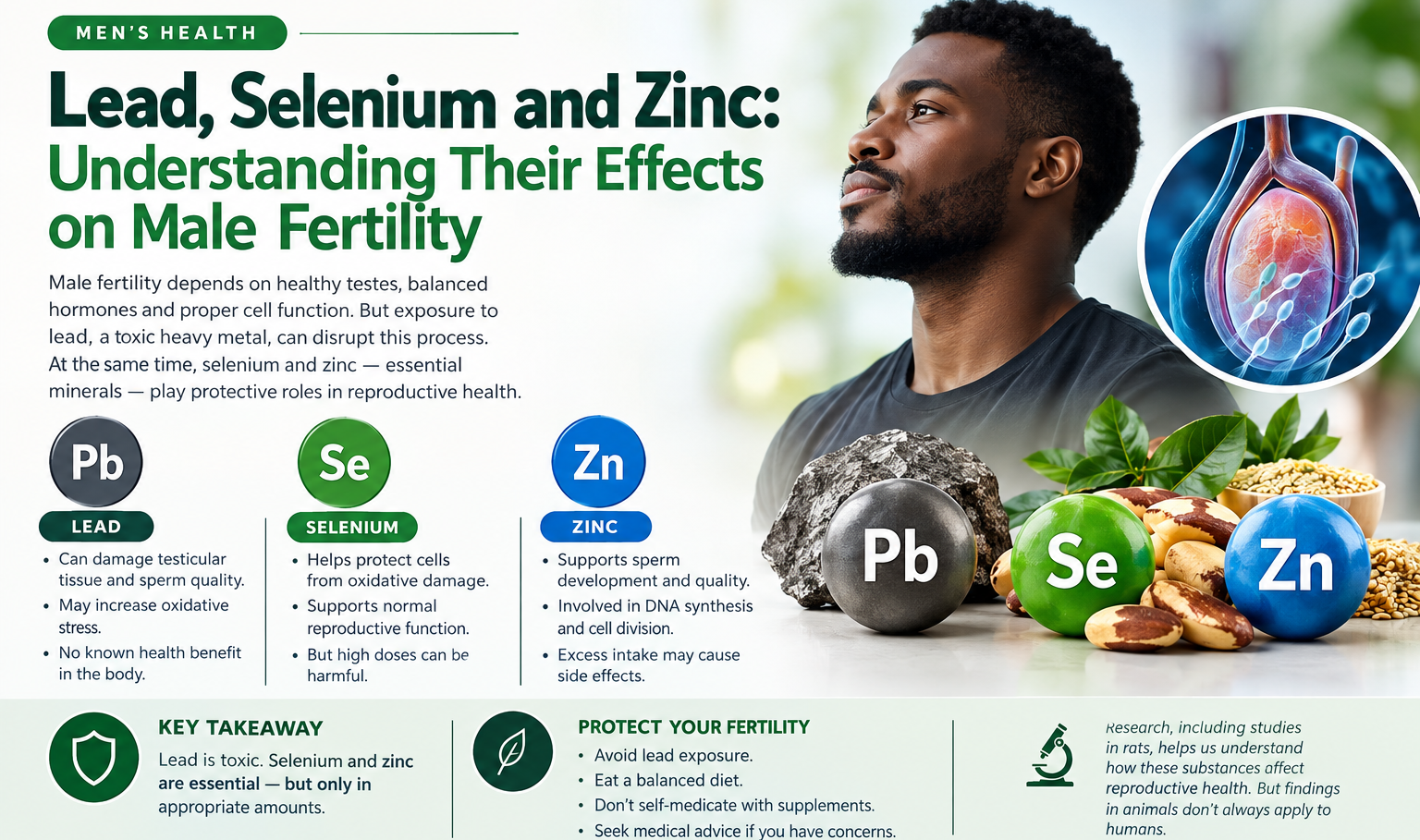
Male fertility depends on a complex system of hormones, reproductive organs, cells and biochemical processes working together. One important part of this system is the testes, where sperm are produced and developed.
However, exposure to certain environmental substances, including lead, may interfere with normal reproductive function. At the same time, essential minerals such as selenium and zinc have attracted scientific interest because of their roles in antioxidant defence and normal reproductive biology.
So, what happens when lead enters the picture, and could selenium and zinc help protect the male reproductive system?
Lead and Male Reproductive Health
Lead is a toxic heavy metal that can be found in contaminated soil and dust, some industrial environments, old paints and certain other sources of environmental exposure.
The body does not need lead for any normal biological function. Excessive exposure can affect several organs and systems, including the nervous system, kidneys and reproductive system.
In males, research has raised concerns about the possible effects of lead exposure on:
- Sperm production
- Sperm quality and movement
- Testicular tissue
- Hormonal regulation
- Oxidative balance within reproductive tissues
One possible mechanism is oxidative stress. This occurs when the production of harmful reactive molecules exceeds the body’s ability to neutralise them. Because sperm cells and testicular tissues can be particularly vulnerable to oxidative damage, increased oxidative stress may interfere with normal reproductive processes.
Why Is the Germinal Epithelium Important?
Inside the seminiferous tubules of the testes is a specialised layer called the germinal epithelium.
This is where the different stages of sperm development take place. Cells within this tissue undergo a carefully regulated process that eventually produces mature sperm.
Damage or disruption to this environment can therefore have consequences for sperm production.
Scientists can study specific enzymes and molecular markers within testicular tissue to understand whether exposure to a substance has altered normal cellular activity.
One group of markers that has been investigated is alkaline phosphatase (ALP) and placental alkaline phosphatase (PLAP).
What Are Alkaline Phosphatase and PLAP?
Alkaline phosphatase is a family of enzymes involved in several biological processes. Different forms of the enzyme are expressed in different tissues.
Placental alkaline phosphatase (PLAP) is one particular form that researchers can investigate as a molecular marker in certain tissues and cellular conditions.
Studying these enzymes can provide researchers with information about changes occurring at the cellular level.
In experimental studies involving lead exposure, examining molecular markers such as ALP and PLAP can help scientists investigate how toxic substances may influence the testicular environment and germinal epithelium.
Where Do Selenium and Zinc Come In?
Unlike lead, selenium and zinc are essential micronutrients. The body needs them in appropriate amounts for normal biological functions.
Selenium
Selenium contributes to antioxidant defence through its role in several selenoproteins, including enzymes involved in protecting cells from oxidative damage.
Because oxidative stress is one proposed pathway through which toxic exposures can damage reproductive tissues, researchers have investigated whether adequate selenium status may support testicular antioxidant defences.
However, this does not mean that taking large amounts of selenium can reverse toxic exposure.
Zinc
Zinc is involved in numerous biological processes, including DNA synthesis, cell division, protein production and normal reproductive function.
The testes have a relatively high requirement for zinc, and the mineral plays important roles in sperm development and function.
As with selenium, more is not necessarily better. Excessive zinc intake can cause adverse effects and can interfere with the absorption of other minerals.
What Does Research in Rats Tell Us?
Animal studies have provided valuable information about the potential relationship between heavy-metal exposure, antioxidant minerals and reproductive tissues.
In studies involving adult Sprague Dawley rats, researchers have examined the effects of lead exposure on testicular tissues and molecular markers, including alkaline phosphatase and PLAP. Some experimental work has also investigated whether supplementation with selenium and zinc influences these changes.
Such research is important because it helps scientists understand possible biological mechanisms behind reproductive toxicity.
But there is an important distinction:
Results observed in rats cannot automatically be assumed to occur in humans.
Animal models are useful for investigating mechanisms and generating hypotheses, but human studies are necessary to establish how strongly these findings apply to people.
Does Selenium or Zinc Protect Against Lead Poisoning?
This is where caution is important.
Although selenium and zinc are biologically important and have antioxidant-related functions, they should not be viewed as antidotes to lead poisoning.
Someone who has been exposed to lead should not attempt to treat the exposure simply by taking mineral supplements.
The most important steps are identifying and stopping the source of exposure and seeking appropriate medical evaluation. In cases of significant lead poisoning, medical treatment may include specialised therapies determined by healthcare professionals.
Protecting Male Reproductive Health
Reducing exposure to environmental toxins is an important part of protecting reproductive health.
Practical measures may include:
- Following appropriate safety procedures when working around lead or other heavy metals.
- Avoiding exposure to contaminated dust or materials.
- Maintaining a balanced diet that provides essential micronutrients.
- Avoiding unnecessary high-dose mineral supplementation.
- Seeking medical advice when significant occupational or environmental exposure is suspected.
- Discussing persistent fertility concerns with a qualified healthcare professional.
The Bigger Picture
The relationship between environmental toxins and male fertility is an important area of scientific research.
Lead exposure may affect reproductive tissues through several biological pathways, including oxidative stress and cellular disruption. Selenium and zinc, meanwhile, are essential nutrients involved in antioxidant protection and normal cellular and reproductive functions.
Research involving animal models provides clues about how these substances may interact at the molecular and tissue levels. However, it is essential to interpret those findings carefully and avoid assuming that an experimental result in rats represents a proven treatment or effect in humans.
Final Takeaway
Lead is a toxic substance with no known beneficial role in the body, while selenium and zinc are essential nutrients required in appropriate amounts.
Research into lead, selenium, zinc and testicular molecular markers such as alkaline phosphatase and PLAP is helping scientists better understand how environmental exposures may influence male reproductive health.
The key lesson is not that supplements can cancel out toxic exposure. Rather, it is that preventing harmful exposure, maintaining adequate nutrition and seeking appropriate medical care remain fundamental to protecting reproductive health.
This article is for educational purposes and does not replace professional medical advice.
Leave A Comment